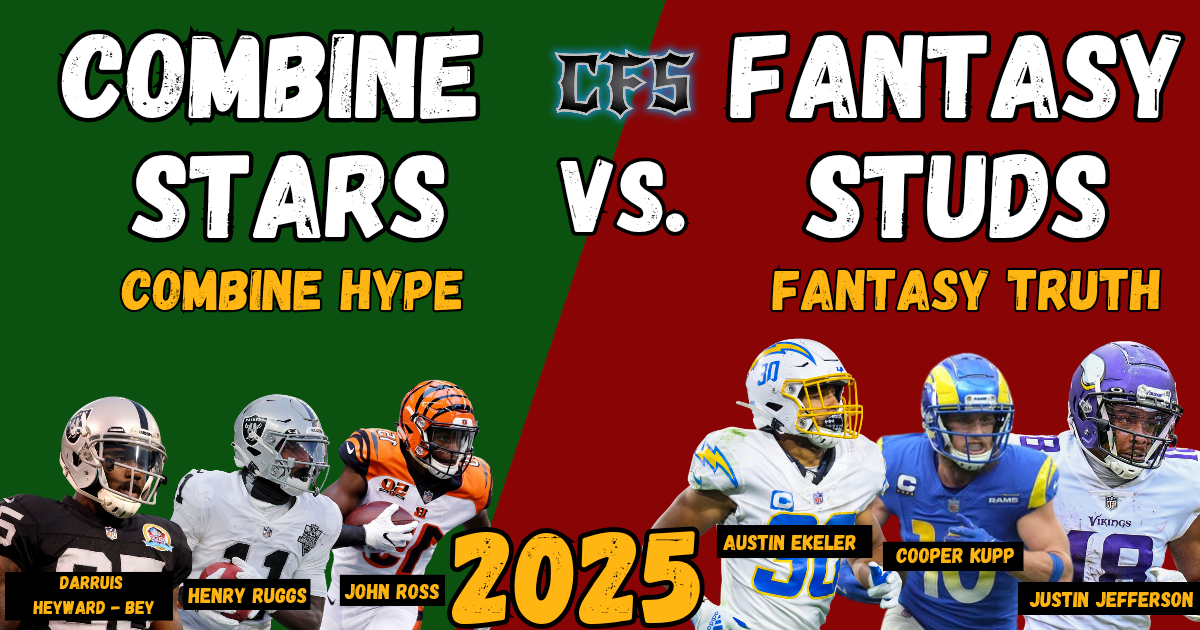
Fantasy Reality vs. Combine Hype
Every year, the NFL Combine dazzles fans and front offices with superhero sprints, highlight-reel verticals, and eye-popping agility drills. But fantasy history is littered with cautionary tales: elite athletes who crushed the combine, only to fade into irrelevance. Think John Ross, Vernon Gholston, or Darrius Heyward-Bey.
Athleticism can create buzz, but it doesn’t guarantee fantasy production. Combine testing is a tool — not a crystal ball. True dynasty winners know how to balance athletic metrics with film study, college production, and landing spot. In this article, we break down which combine drills actually matter, where the traps lie, and how you can outdraft your league in 2025.
Combine Stars Who Busted
1. John Ross (WR, 2017)
-
40-Time: 4.22 seconds (record)
-
Drafted: Top 10 by Bengals
-
Reality: 51 catches in 4 seasons
Ross became a legend with his record 40-yard dash, but his NFL career fizzled due to injuries, poor hands, and lack of route nuance. The speed didn’t translate.
2. Vernon Gholston (EDGE, 2008)
-
Testing: 4.65 40 at 266 lbs, 35.5″ vertical, 37 bench reps
-
Drafted: 6th overall by Jets
-
Reality: 0 career sacks
Gholston was explosive on paper, but stiff hips, poor technique, and zero motor made him a classic workout warrior.
3. Darrius Heyward-Bey (WR, 2009)
-
Testing: 4.30 40-yard dash at 6’2”, 210 lbs
-
Drafted: 7th overall by Raiders
-
Reality: Career 2,071 yards with 50% catch rate
The Raiders ignored poor film and production, betting on raw speed. It backfired.
Fantasy Insight: Don’t let the stopwatch override production and polish. Ross, Gholston, and DHB all showed red flags on film, but teams got caught in the Combine current.
Which Combine Drills Actually Matter for Fantasy?
40-Yard Dash
-
WR/TE: Sub-4.4 = deep threat upside
-
RB: Sub-4.45 + size = breakaway threat (Chris Johnson)
-
Caution: John Ross ran 4.22 but lacked route polish
Fantasy Takeaway: Speed is a piece. Combine it with production metrics (yards/route run, dominator rating) and projected role.
Vertical Jump
-
WR/TE Focus: >35” = red-zone alpha (Jimmy Graham, A.J. Brown)
-
RBs: Less predictive; vision > leaping ability
Fantasy Takeaway: Prioritize vertical for WRs/TEs. It flags red-zone upside.
Agility Drills (3-Cone, Shuttle)
-
Slot WRs: <6.8 sec 3-cone (e.g., Cooper Kupp)
-
TEs: <7.0 sec 3-cone = route fluidity (Travis Kelce)
-
RBs: Important for pass-catching/change-of-direction backs (Ekeler)
Fantasy Takeaway: Great for possession WRs and receiving TEs. Not a death blow for vertical threats like DK Metcalf.
Weight-Adjusted Speed (Speed Score)
Fantasy Takeaway: Always consider size. Speed + weight = fantasy explosion if the traits translate.
Context Is Everything: Avoiding the Combine Trap
1. Combine Metrics Are Just One Piece
John Ross (4.22) and Henry Ruggs (4.27) had elite speed. But Justin Jefferson (4.43) dominated due to route IQ and a 42% dominator rating.
2. Film Study Is Gold
Metrics don’t show route diversity, contact balance, or football IQ. Players like Cooper Kupp and TreVeyon Henderson show their value on tape.
3. Analytics Matter
-
Breakout Age: Early dominators (Chase at 19) = NFL-ready
-
Dominator Rating: 30%+ signals volume (Luther Burden at 34%)
-
Speed Score: Weight-adjusted performance reveals functional athleticism
4. Draft Capital + Landing Spot
-
Round 1 Hit Rate: 63% vs. Day 3 at 23%
-
Example: Brian Thomas Jr. – 1st round pick signals immediate opportunity
-
Avoid: Late-round workout freaks (e.g., Dylan Sampson)
5. Create a Blended Process
Use film, analytics, combine, and team situation to evaluate prospects:
-
Film: Route technique, burst, hands
-
Analytics: Target share, broken tackles
-
Combine: Confirms or challenges film
-
Landing Spot: Coaching, depth chart, scheme
Key Fantasy Metrics by Position
Running Backs
Wide Receivers
-
Route Participation + aDOT
-
Garrett Wilson: 93% route share despite 22% off-target rate
-
High aDOT (DJ Chark = ceiling), Low aDOT (Deebo = volume)
Tight Ends
-
Red-Zone Usage + Snap Share
-
Kittle: 11 TDs in 2022 with 21 end-zone targets
-
Kelce/Andrews: 80%+ routes/snaps
Quarterbacks
Final Takeaway: Volume and situation > combine numbers. Use testing as confirmation, not a scouting shortcut.
Final Word: Dynasty Titles Aren’t Won in Spandex
The NFL Combine creates buzz, but fantasy football success demands more than athletic flash. Don’t let 40-times or bench reps override film, production, and team context. The best dynasty managers use combine metrics to support what they already see — not to rewrite their boards.
Draft with discipline. Chase opportunity. And never forget: Combine fireworks fade. Fantasy points don’t.
https://podcasters.spotify.com/pod/show/cerberusfantasysports2023