
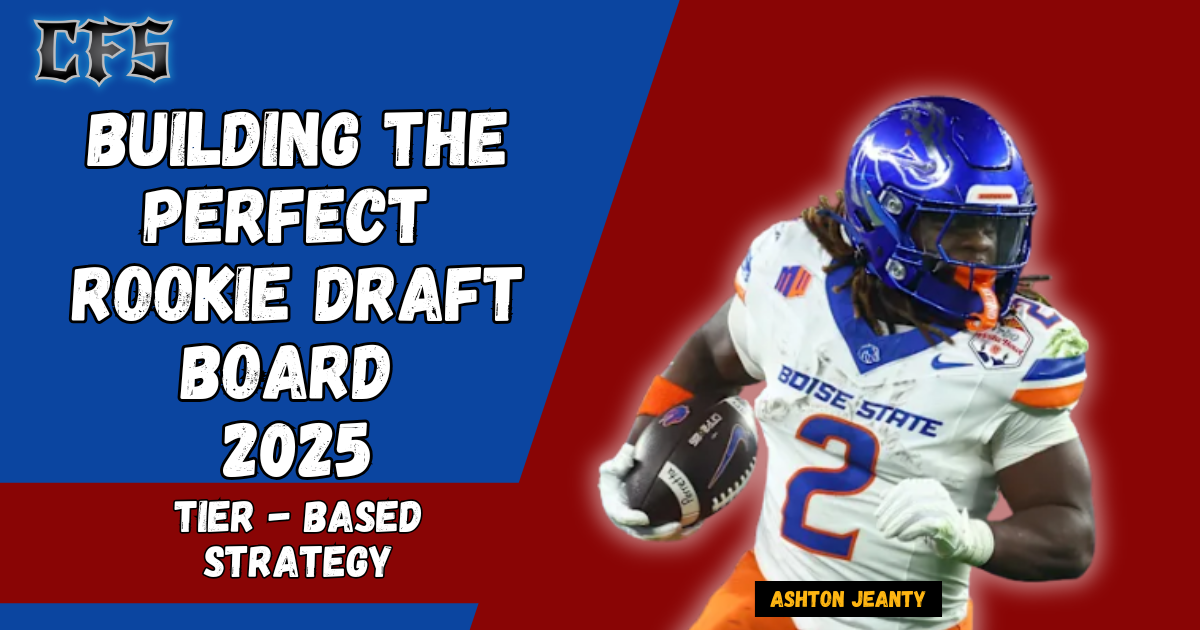
Static rankings are for commentators. Tiers are for champions. In C2C leagues, rigid lists fail because they ignore value cliffs, positional scarcity, and draft-day chaos. Imagine choosing between Caleb Williams and Marvin Harrison Jr.—both are Tier 1 equals, but rankings force you to pick one. Tiers eliminate guesswork by grouping players with similar value, empowering you to pivot seamlessly when your target gets sniped.
The Tier Advantage:
- Value Cliffs: When Tier 1 ends, the talent gap is stark. Miss it, and you’re stuck chasing leftovers.
- Positional Scarcity: QB/RB droughts demand urgency. Tiers highlight when to strike.
- Adaptability: Drafts are unpredictable. Tiers let you adjust without panic.
Example: If Tier 1 RB Ashton Jeanty goes #1, pivot to Tier 1 WR Tetairoa McMillan—no value lost.
The 2025 Tier System: Your Blueprint
Forget rankings. Group prospects into 4 tiers based on talent, upside, and risk. Here’s your cheat sheet:
Tier 1: Elite Blue Chips
Can’t-Miss Franchise Cornerstones
- Ashton Jeanty (RB, Boise State)
- Why He’s Elite: 2,700 total yards (1,900 rushing, 800 receiving) with Bijan Robinson-level contact balance. Led FBS in forced missed tackles (112). Top-10 NFL Draft lock.
- Fantasy Fit: Three-down bell cow. Draft him and forget RB for 5 years.
- Tetairoa McMillan (WR, Arizona)
- Why He’s Elite: 6’5”, 212 lbs with a 4.43 40-yard dash. Back-to-back 1,300-yard seasons. Footwork mirrors Ja’Marr Chase; box-out ability like Mike Evans.
- Fantasy Fit: Alpha X-receiver. Target hog in any offense.
Strategy: Trade up for Tier 1. These are foundational pieces.
Tier 2: High-Floor Starters
Safe Picks with Weekly Impact
3. Omarion Hampton (RB, UNC)
- Why He’s Safe: 1,500+ rushing yards, 15 TDs, and a 4.48 40-yard dash. Zone-scheme dream with 38” vertical burst.
- Risk: Wore down late in 2024 (3.8 YPC in final 4 games).
- Emeka Egbuka (WR, Ohio State)
- Why He’s Safe: 70 catches, 896 yards, 10 TDs as a senior. NFL-ready slot weapon.
- Risk: Lacks elite top speed (4.55 40-yard dash).
- Luther Burden III (WR, Missouri)
- Why He’s Safe: 4.41 speed with 1,212-yard sophomore breakout.
- Risk: Route tree limited to screens/slants. Needs NFL coaching.
Strategy: Tier 2 is for contenders. Prioritize immediate contributors over projects.
Tier 3: High-Risk, High-Reward
Boom-or-Bust Lottery Tickets
6. Travis Hunter (WR/CB, Colorado)
- Upside: 96 catches, 1,258 yards, 15 TDs while playing defense.
- Risk: NFL teams view him as a CB first. Could be a gadget WR.
- TreVeyon Henderson (RB, Ohio State)
- Upside: 4.43 speed, 1.52 10-yard split (elite acceleration).
- Risk: Avoids contact; career third-down back if he can’t add bulk.
- Matthew Golden (WR, Texas)
- Upside: 4.29 speed (Combine’s fastest WR). Jameson Williams 2.0.
- Risk: Raw routes. Only one year of elite production (987 yards).
Strategy: Tier 3 is for rebuilders. Swing for fences after securing Tier 1-2 anchors.
Tier 4: Depth with Upside
Late-Round Gems
9. Cam Ward (QB, Miami)
- Why He’s a Gem: 4,313 yards, 39 TDs, 7 INTs. Dual-threat flair (8 rush TDs).
- Draft Capital Dependency: Needs Round 1 capital to justify early pick.
- Jayden Higgins (WR, Iowa State)
- Why He’s a Gem: 6’4”, 217 lbs with 39” vertical. Senior Bowl standout.
- Risk: Played in run-heavy offense (87 catches, but limited downfield usage).
- Tre Harris (WR, Mississippi)
- Why He’s a Gem: 1,030 yards in 8 games. Route technician (4.54 speed isn’t elite, but footwork is).
- Risk: Older prospect (turns 24 as a rookie).
Strategy: Tier 4 is for patience. Stash these players on taxi squads.
Balancing BPA vs. Team Need
Rebuilding? Prioritize Tier 1-2 talent regardless of position. Example: Draft McMillan (WR) even if you’re stacked at WR—trade excess later.
Contending? Target Tier 2-3 for plug-and-play starters. Example: Egbuka’s PPR floor > Hampton’s workload risk.
Landing Spot Rules:
- Positive Fit: If Cam Ward lands in Atlanta (play-action heavy), bump him to Tier 3.
- Negative Fit: If TreVeyon Henderson joins a RBBC (e.g., Miami), drop him to Tier 4.
Advanced Tier Strategies
- Identify Tier Breakers
Look for prospects who could jump tiers based on draft capital or scheme fit:
- Colston Loveland (TE, Michigan): A Travis Kelce clone if he lands with a creative OC.
- Kaleb Johnson (RB, Iowa): Grinder back who could leap to Tier 2 if drafted by the Ravens or Titans.
- Exploit Positional Runs
If your league overvalues QBs early, let them chase. Use the panic to grab falling Tier 1-2 WRs/RBs. - Tier Stacking
Pair Tier 1-2 players with Tier 3-4 teammates for handcuff upside:
- Draft Ashton Jeanty (Tier 1) + Dylan Sampson (Tier 4) to lock down a backfield.
Draft-Day Playbook
- Pre-Draft Prep
- Build your board using the tier template.
- Highlight 2-3 sleeper targets in Tier 4 (e.g., Jalen Royals, Utah State WR).
- Mock Draft Relentlessly
- Practice scenarios:
- What if Tier 1 RBs vanish by pick #3? Pivot to McMillan or trade down.
- Travis Hunter slips to Round 2? Steal him as a lottery ticket.
- Leverage Trade Opportunities
- If Tier 1-2 players fall, trade future picks to move up.
- Example: Swap a 2026 2nd-rounder to grab Luther Burden III at #7.
- Post-Draft Adjustments
- Landing Spot Reactions:
- Positive: Tetairoa McMillan to Chargers (Justin Herbert throwing deep).
- Negative: Omarion Hampton to Broncos (RBBC with Javonte Williams).
- Camp Buzz: If Matthew Golden earns WR1 reps in Texans camp, promote him to Tier 2.
Case Study: Winning with Tiers
Scenario: 12-team C2C draft, you hold pick #5.
- Pre-Draft Board:
Tier 1: Jeanty, McMillan
Tier 2: Hampton, Egbuka, Burden
Tier 3: Hunter, Henderson, Golden
Tier 4: Ward, Higgins, Harris
Draft Flow:
- Picks #1-4: Jeanty, McMillan, Hampton, Egbuka.
- Your Move: Take Luther Burden III (Tier 2) over reaching for Tier 3.
- Later Rounds: Snag Tre Harris (Tier 4) in Round 3 as a WR4 stash.
Result: You land a Tier 2 WR1 and a high-upside WR4, while others panic-pick Tier 3 QBs/RBs.
Common Rookie Draft Mistakes
- Overvaluing Combine Warriors
- Example: Cam Skattebo (RB, Arizona State) had a 39.5” vertical but lacks NFL burst.
- Ignoring Scheme Fit
- Isaiah Bond (WR, Texas) in a West Coast offense? Avoid. In a vertical scheme? Target.
- Chasing Recruiting Hype
- Luther Burden III was a five-star recruit but regressed in 2024. Trust tape, not stars.
Your board isn’t set in stone—update weekly. Post-NFL Draft, reshuffle based on landing spots, depth charts, and camp buzz.
Example:
- Pre-Draft: Luther Burden III (Tier 2).
- Post-Draft: If Burden joins the Chiefs, move him to Tier 1.
Tiers turn chaos into clarity. Build your board, trust the process, and outmaneuver managers married to rankings.